 Drive to Sign
Notarization
on demand.
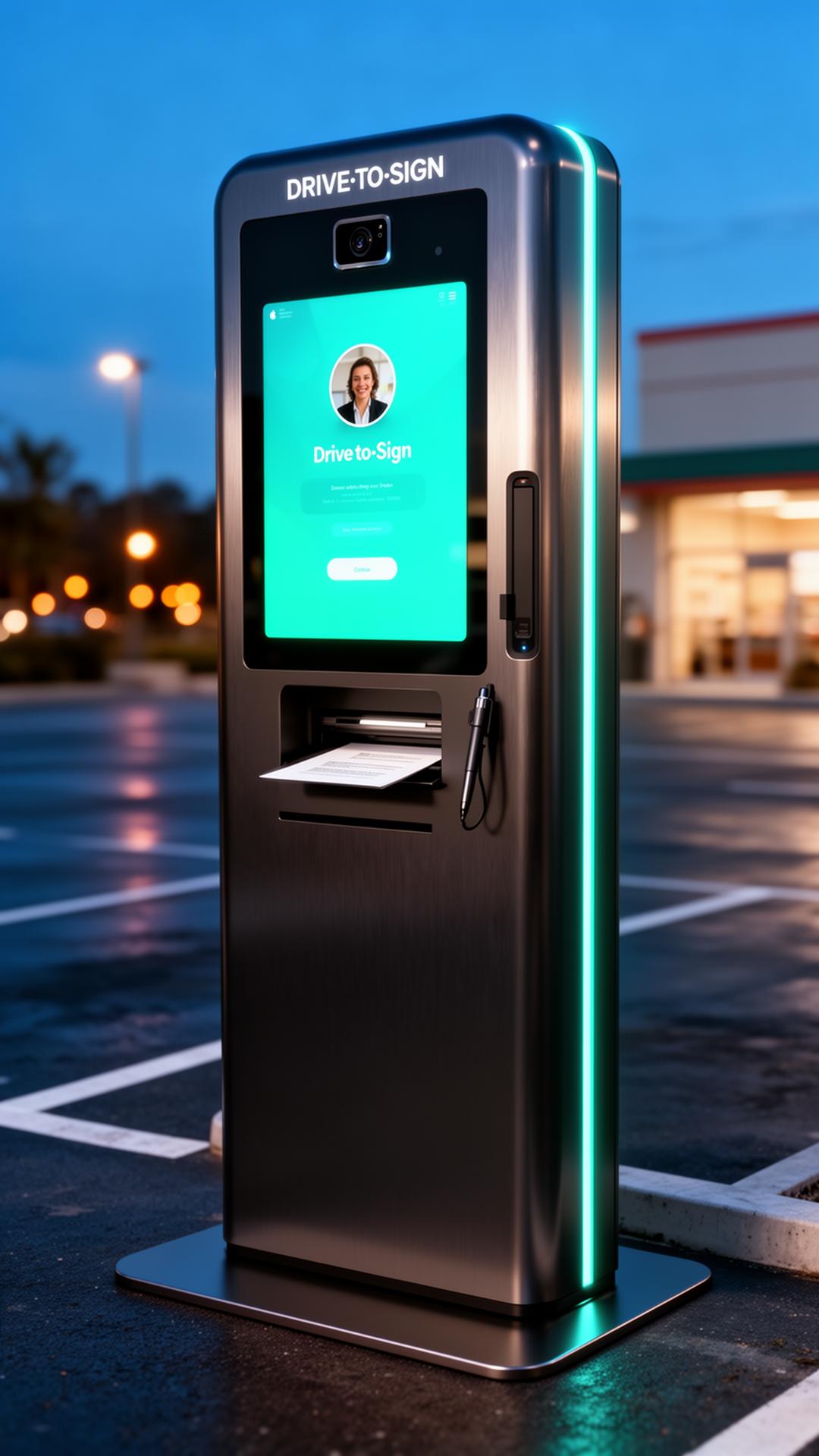
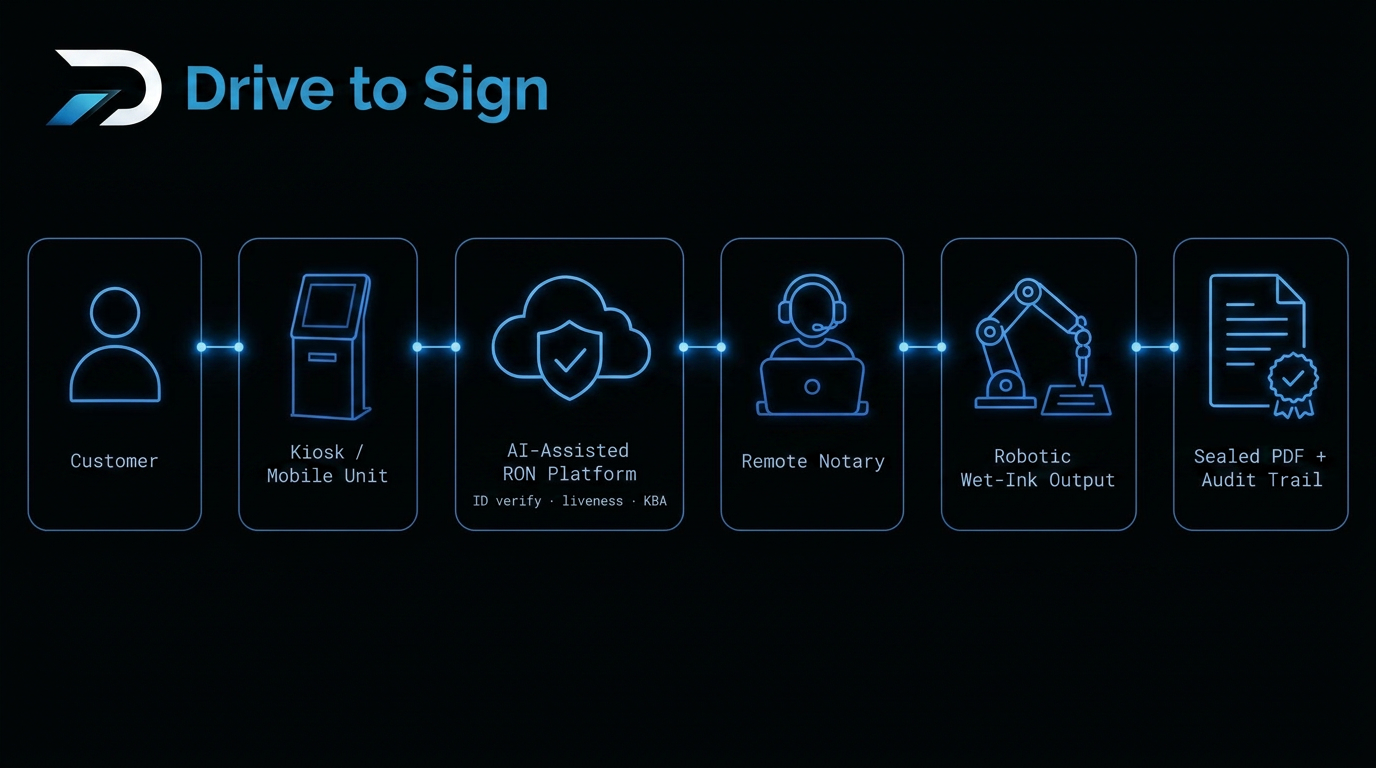
Drive·to·Sign is the first AI-assisted remote notarization kiosk with robotic wet-ink reproduction — wet signatures, on real paper, in under eight minutes, anywhere.
I'm Rodney Wilson.
I lived this problem
for seven years.
Seven years in the title industry. Every closing, the same broken loop — dispatch a notary through a third-party coordinator, wait, hope they show up, field calls from buyers and sellers asking "who is this person, where are they, when are they coming?"
The notary did all the real work — drove across town, burned gas, printed fifty pages, sat in someone's living room. The coordinator captured the margin. Title companies overpaid for slow, opaque fulfillment. Customers had no visibility. Nobody was happy.
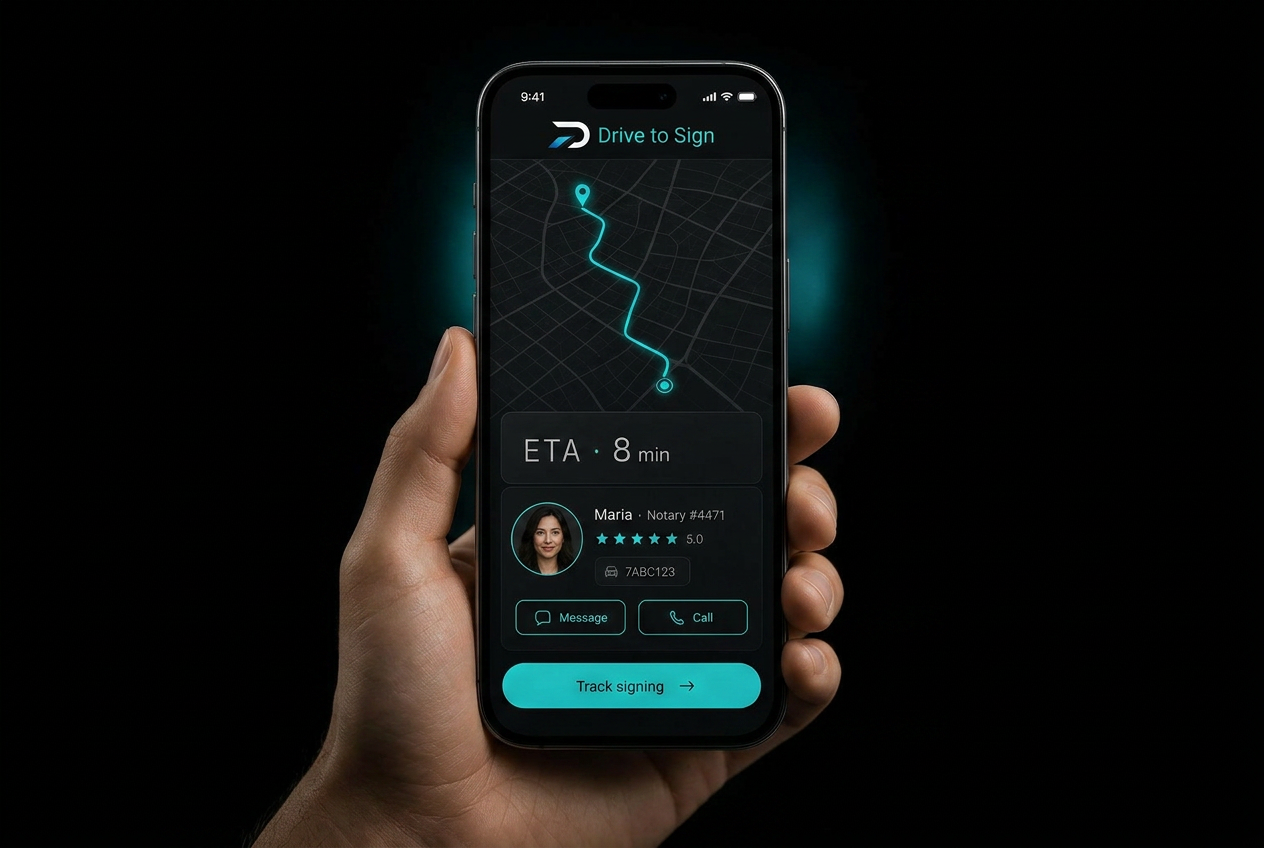
Drive·to·Sign rebuilds the rail. Geo-routed dispatch, live ETA, court-admissible audit trail, and a clean economic split: the notary keeps 70% of the fee, we take 30% for routing, payments, KYC, and compliance — with a platform minimum so unit economics hold at every price point.
Title companies pay the same or less, get faster fulfillment and a real audit trail. Notaries get steady local volume. Customers stop guessing.
The notary stack is offline, slow,
and silently expensive.
1.25 billion notarial acts happen each year in North America. Almost every one still requires a human to physically witness ink hitting paper.
A notary on
the road to you.
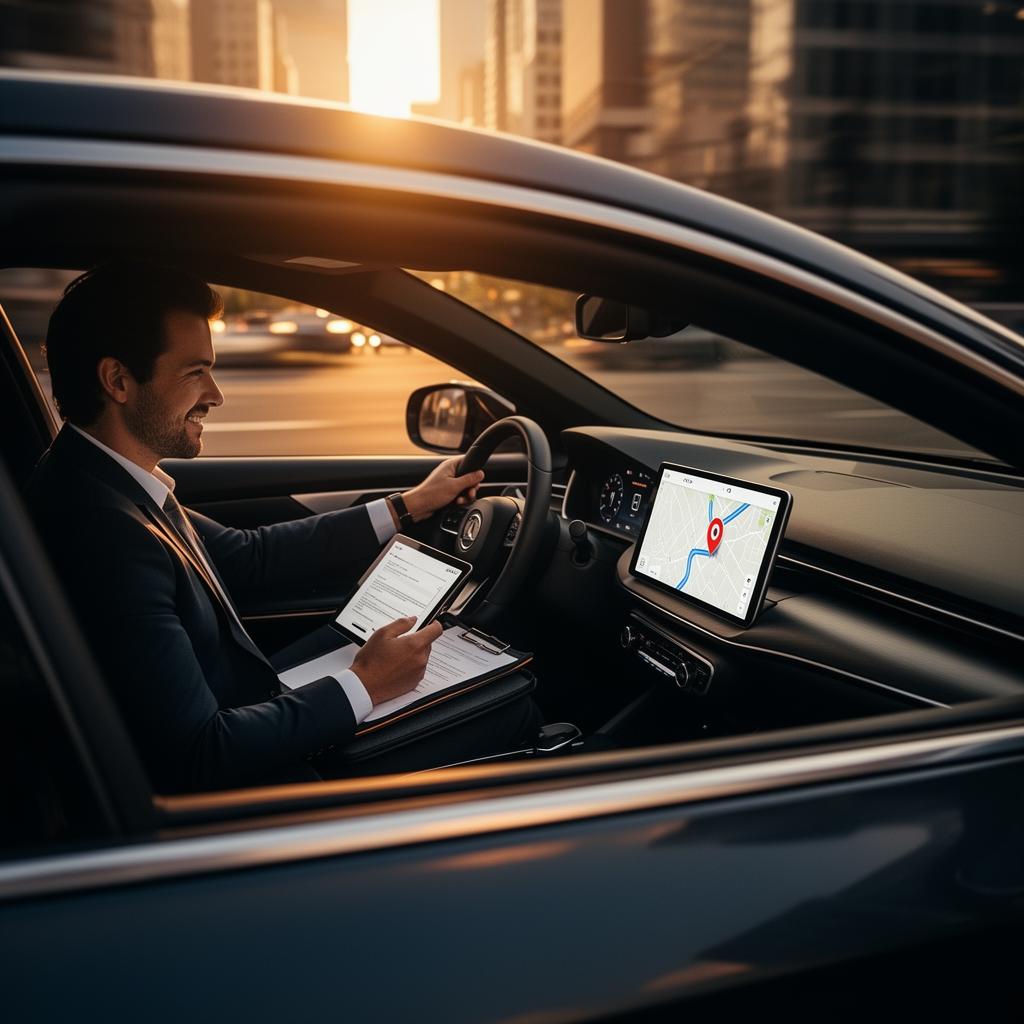
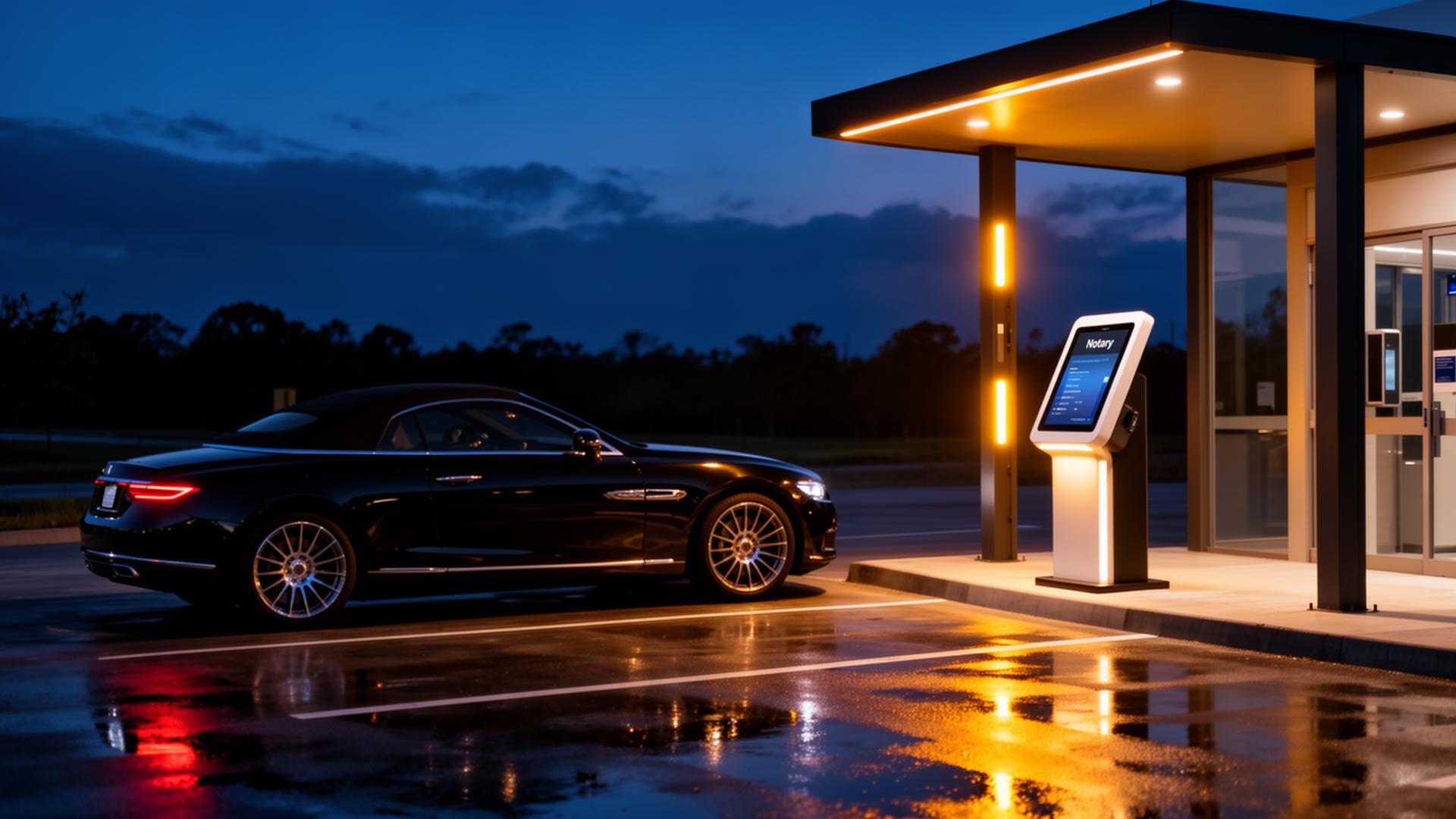
Think of it like hailing a Lyft — except a commissioned notary rolls to you. Or pull into a 24/7 kiosk at a bank vestibule, business center, airport, cash-advance storefront, or downtown plaza — same way you'd hit an ATM after hours. The bank closes at 5. Life doesn't.
High-traffic locations, after-hours, on the customer's own time. Mobile notaries get geo-routed jobs in real time instead of refreshing inboxes, title companies get faster fulfillment with a real audit trail, and customers stop rushing to the bank between meetings.
The kiosk and
the app in your pocket.
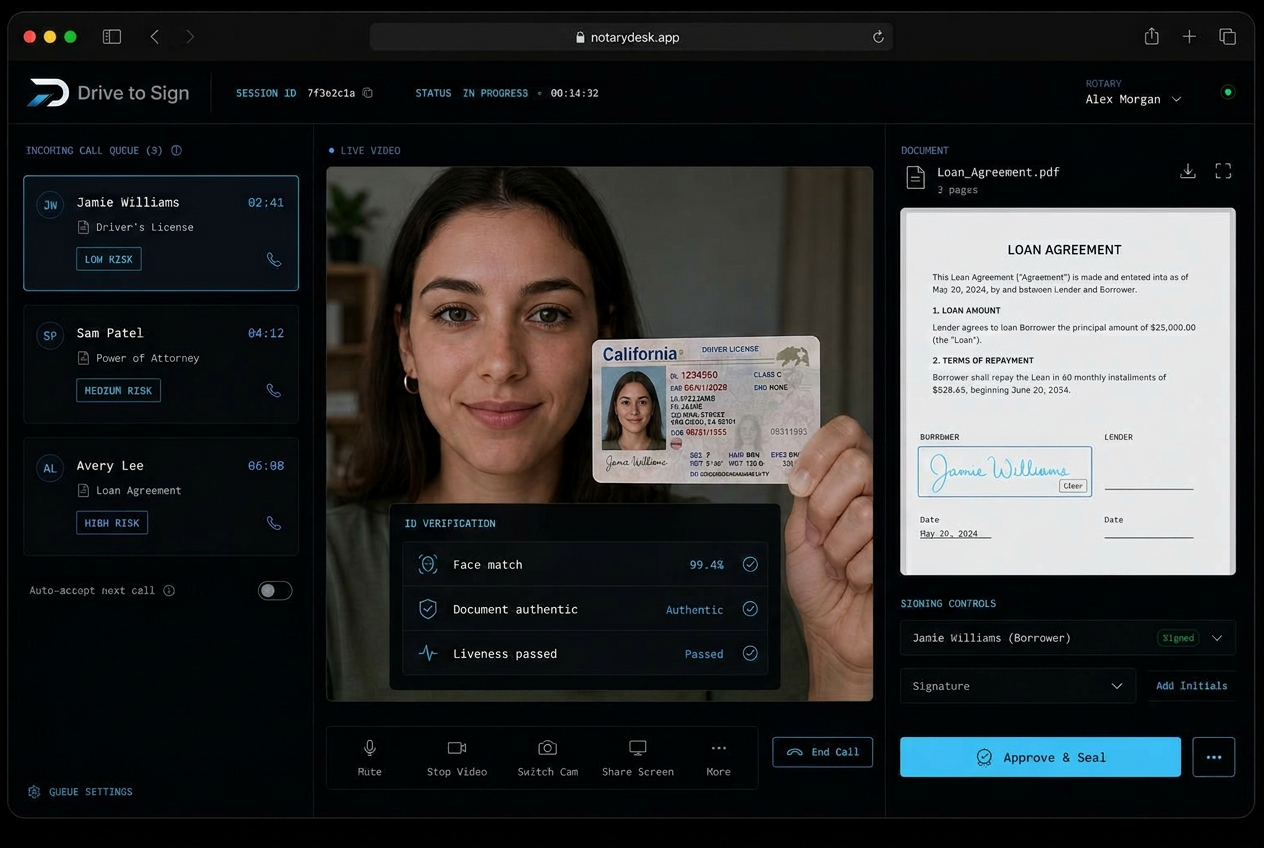
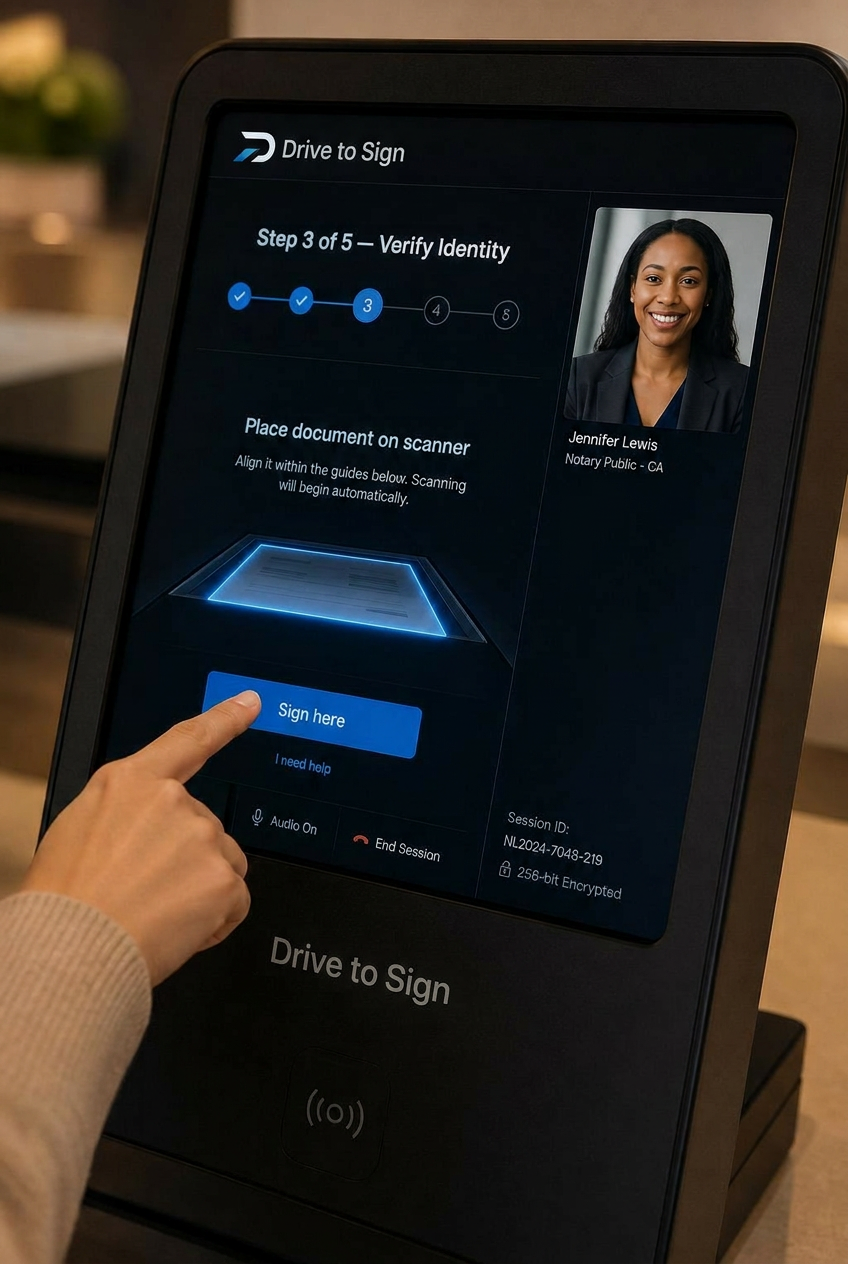
Software speed.
Hardware finality.

Three curves. One window.
A $9B category
hiding in plain sight.
Banks close at 5pm. Notary offices close earlier. Closings, affidavits, and DMV-adjacent paperwork don't wait. We deploy 24/7 kiosks in bank vestibules, business centers, airports, cash-advance storefronts, and downtown plazas — monitored, well-lit, high-traffic locations. Same footprint ATMs claimed thirty years ago. The market isn't competing for the 9-to-5; it's the 70% of life that happens after it.
Everyone picks one side.
We bridge both.
Patent the system.
Lock the secret sauce.
Hardware in public lobbies is visible — so we patent it. The intelligence behind it lives on our servers — so we don't.
- ▸Kiosk system + workflow
- ▸Remote notarization flow
- ▸Document execution pipeline
- ▸Wet-ink reproduction framework
- ▸Hardware ↔ software handoff
- ▸Hospital mobile unit form factor
- ◆AI fraud-scoring logic
- ◆Signature reproduction algorithms
- ◆Notary routing & queue engine
- ◆Calibration + tolerance methods
- ◆Compliance automation layer
- ◆Hospital workflow orchestration
Built to the same bar
as the ATM in your bank.
Every session is identity-verified, fully recorded, cryptographically sealed, and retained per state law. Hardware is tamper-resistant. Notaries are bonded, insured, and routed to the signer's jurisdiction.
Day-one product covers the full long tail of general notarizations — affidavits, POAs, vehicle titles, healthcare directives, employment forms, immigration paperwork. Recordable real-estate closings (deeds, mortgages, transfers) require three additional gates: state RON authorization, title-underwriter vendor approval, and lender / GSE acceptance. We pursue those in Phase 2 — they're a moat once won, and we're not pretending to launch with them on day one.
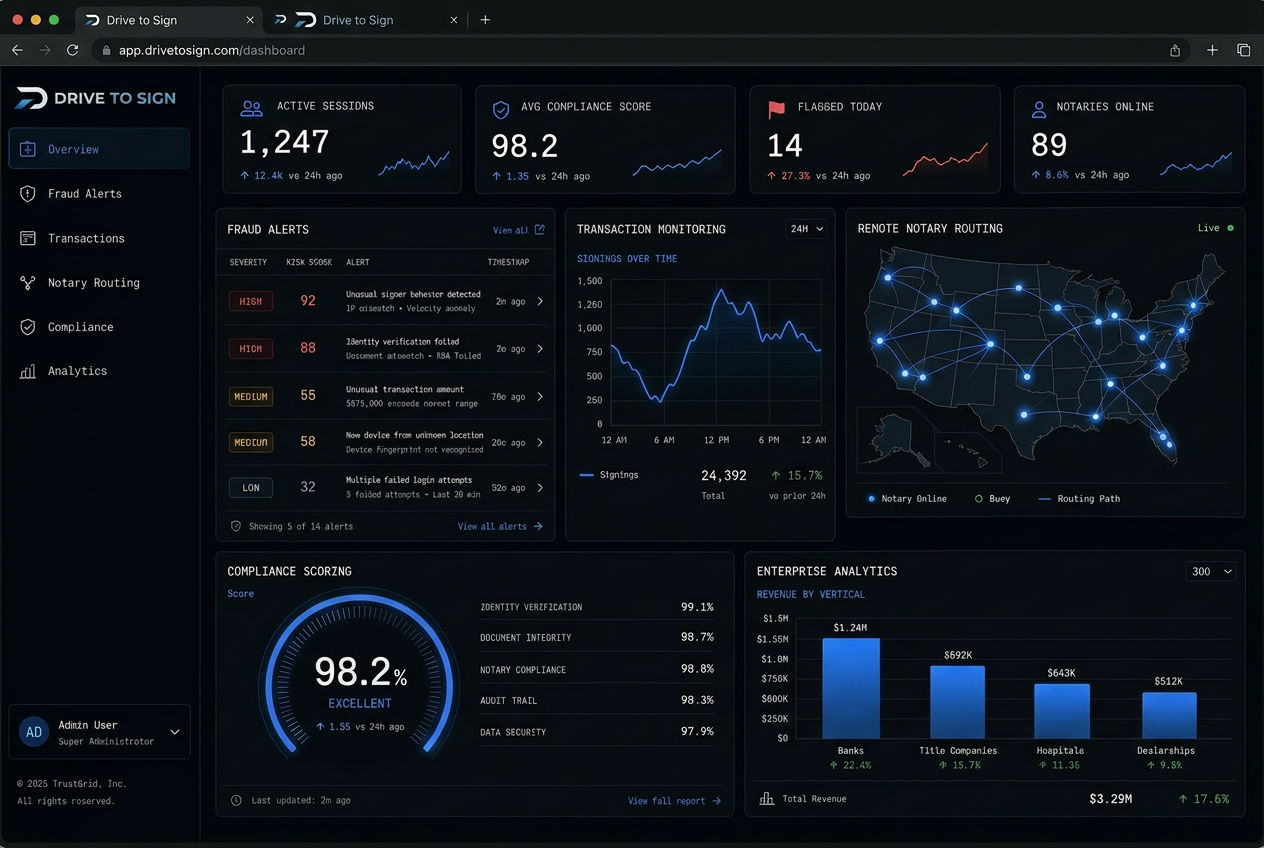
Three rails. One ledger.
- · 20 kiosks
- · Compliance dashboard
- · Remote notarization routing
- · Maintenance + support
- · Enterprise analytics
- · Mobile document carts
- · HIPAA-secure routing
- · POA · consent · directives
- · Emergency legal workflows
- · SaaS dashboard
- · Public-access kiosks
- · Court-system integration
- · Multi-language compliance
- · Audit trail + reporting
- · Infrastructure-grade SLA
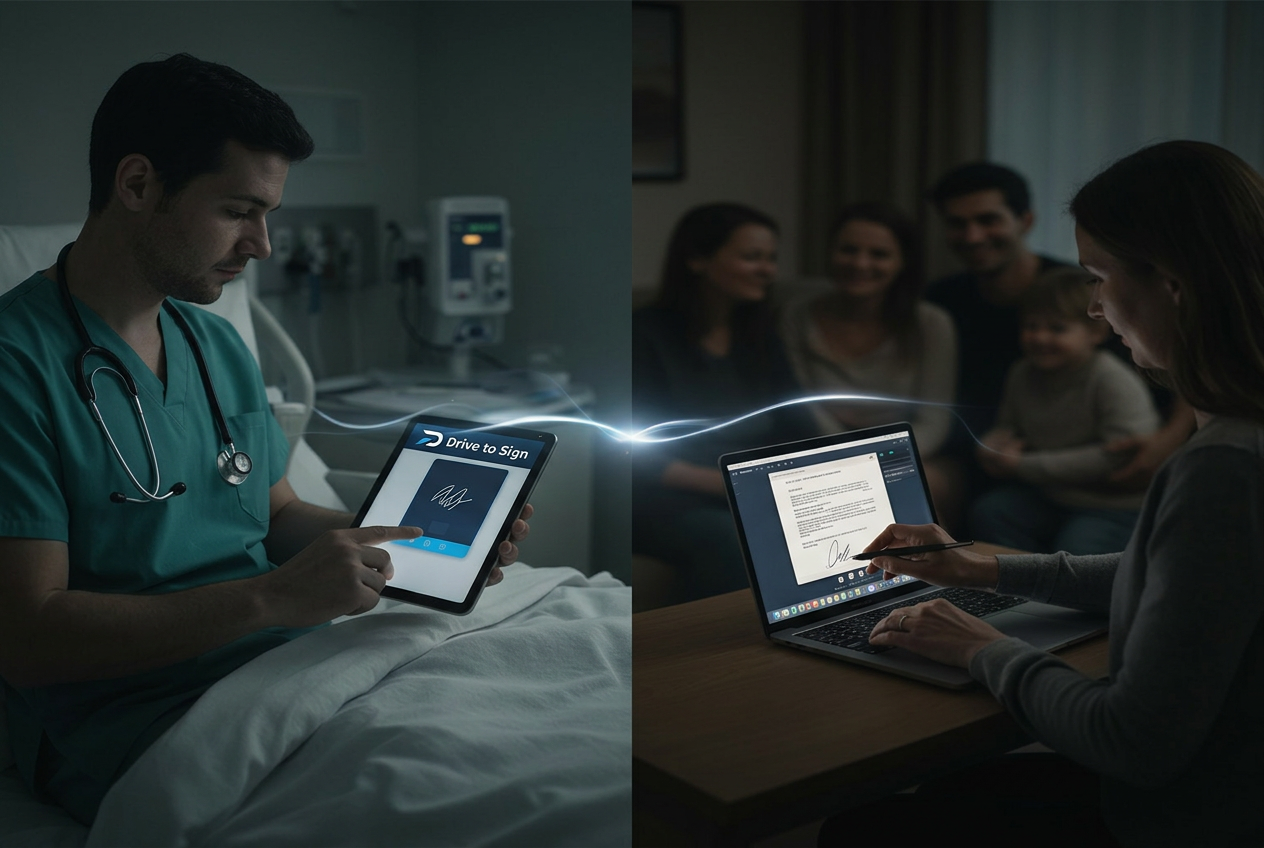
The hospital mobile unit.
A doctor wheels a tablet to the bedside. Family signs from anywhere. A POA, surgery consent, or end-of-life directive is notarized, sealed, and filed before the next vital check — not after the next shift change.
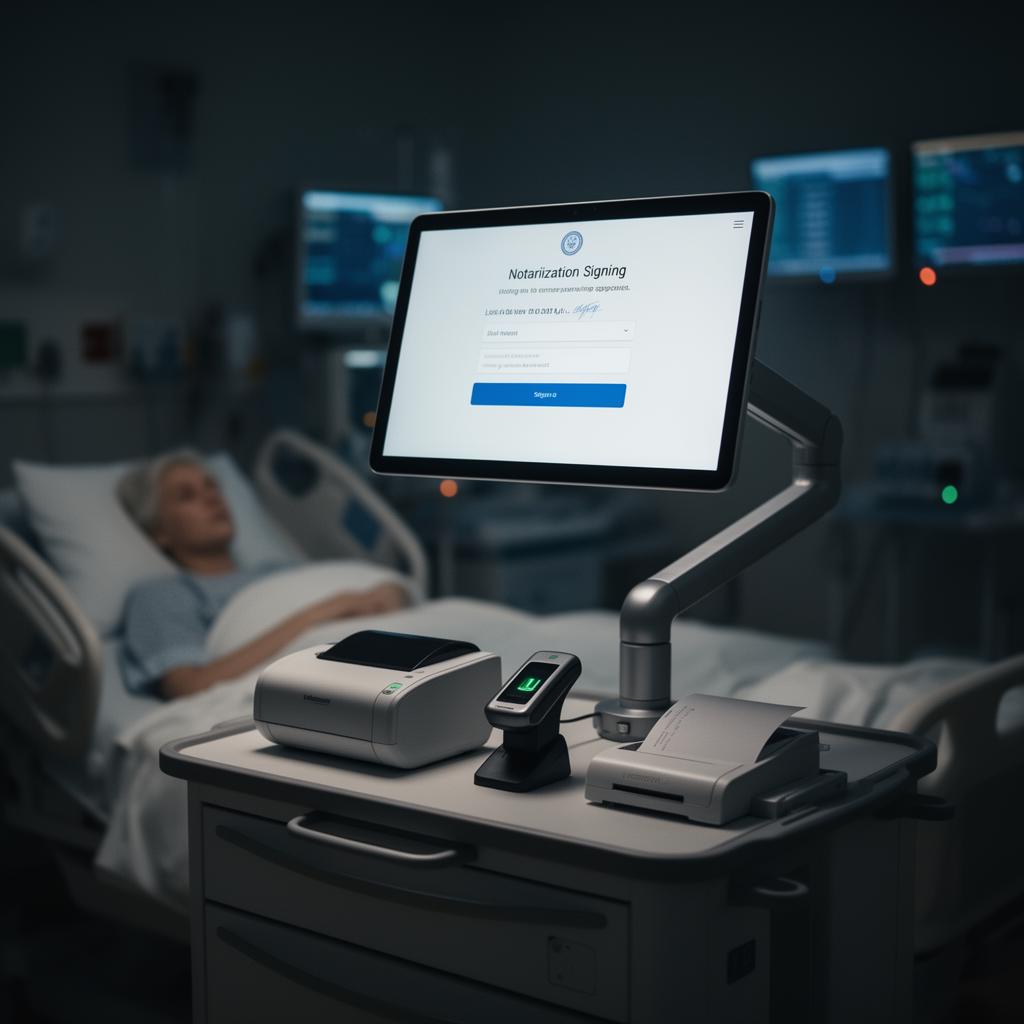
- ·Tablet + secure camera
- ·Biometric ID scanner
- ·Remote notary uplink
- ·Robotic wet-signature printer
- ·Portable document scanner
- ·Power of Attorney
- ·End-of-life authorization
- ·Surgery consent
- ·Guardianship
- ·Legal directives
City by city. Vertical by vertical.
Win one block, then one borough, then one industry. We don't chase the country — we own LA, then export the playbook.
- ▸Kiosks placed in monitored, high-traffic locations
- ▸Bank vestibules, airports, cash-advance storefronts
- ▸Local notary partnerships → instant supply
- ▸Affidavits, POAs, auto titles, parental consents
- ▸Healthcare directives, employment & immigration forms
- ▸Walk-up + dealership + attorney referral · launch-ready
- ▸Mobile units pitched to risk + legal teams
- ▸Pilot → 3-hospital system → enterprise SaaS
- ▸Case studies on POA / consent speed
- ▸Kiosk operator program (rev-share)
- ▸Embedded API in escrow / HR / fintech
- ▸National brand · drive-thru notarization
One sentence on every billboard, kiosk decal, and 15-second ad. The product is the marketing — a kiosk in a 7-Eleven sells itself the moment someone walks past it at 11pm with a stack of papers.
From one kiosk to a signature grid.
$2.5M Seed.
18 months to category lock-in.
Ink is the
last mile.
We're closing the seed in Q3. If you back infrastructure-grade category creators, we'd like 30 minutes.